Originally trained as designer, Niklas Henke is researcher and artist who currently paints cars and house facades. Examples of projects can be seen on his website and Instagram1
Abstract
How can a graphic designer engage with Catherine Chomarat-Ruiz's critical theory of design? Niklas Henke reflects here on how he sensitively reads and translates this type of work. He presents several drawings, created on the pages of this recently published book by the design theorist, which could be used in an exhibition for a wide audience.
Résumé
Comment un designer graphiste peut-il s'emparer de la théorie critique du design élaborée par Catherine Chomarat-Ruiz ? Niklas Henke revient ici sur la manière dont il lit et traduit de façon sensible ce type d'ouvrage. Il présente quelques dessins qui, réalisés sur les pages du livre récemment publié par cette théoricienne du design, pouraient donner lieu à une exposition adressée à un large public.
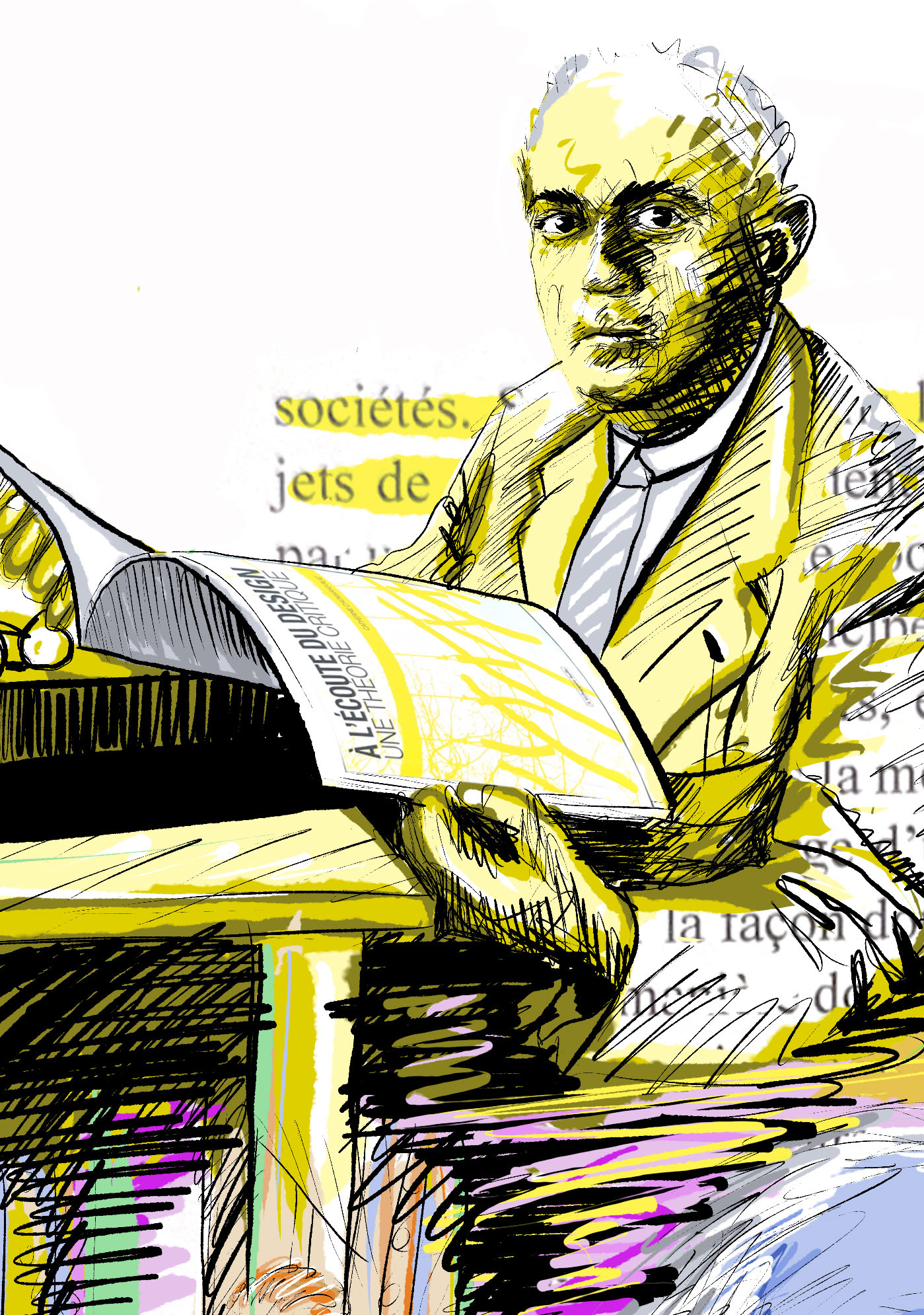
Figure 1. A portrait of Theodor Adorno – reading À l´écoute du design, une théorie critique
Two books were in my bag – a novel and a sketchbook. I never left home without these two objects and a bunch of pencils. For years.
One evening in a Café, I started sketching on the pages of the novel as well, suddenly asking myself: why carrying two books, if one is sufficient! From that day on, I left the sketchbook at home and only carried one book with me – a novel or a book from one of the Frankfort School authors: Traditionelle und kritische Theorie, Die Theorie des kommunikativen Handeln, Haben oder Sein or Beschleunigung und Entfremdung. Normally, I tried to sketch on the bookpages AFTER reading them. This was not always the case. Therefore, I had to buy certain books two times. A first time, turning it to a sketchbook too fast, and then a second time, to actually read it.
Sketching on bookpages made me discover an interesting dialogue between the content of the book and the illustrations I drew on them. Especially when it comes to the works of the Frankfort School authors, I find myself drawing daily life situations, as for example people interacting with their smartphone in public space, on bookpages of critical thinkers analysing the role of technologies in modern societies. Additionally, there is a pure visual interaction between book content and my sketches. The text in the background creates a graphical structure, that I integrate in the illustrations. This is how I ended up sketching on novels and philosophical books for the last ten years.
When Catherine Chomarat-Ruiz and I talked about possible concepts for visualizing her book À l´écoute du design in an artistic way, we discovered that drawing the illustrations visualizing the books content on the pages of the book itself would become a refreshing way to bring the book to life. We decided to sketch historical images of the Frankfort School authors as digital illustrations, thereby mobilizing nowadays technological means for artistic production, which is a core topic for Walter Benjamin (a key figure of the Frankfort School). This example shows how multiple dialogues are created between the content and its form. On the page below you see a famous historical image of Theodor Adorno visiting industrial workers. Linking theorie and practice was a strong intention of Adorno throughout his work. On the page below, two images are linked – Adorno discussing with Horkheimer in the left lower corner, and Adorno visiting industrial workers in the top right corner. These two are connected by thought bubbles, representing the link between Adornos and Horkheimers theoretical analysis and the industrial realities of their time.
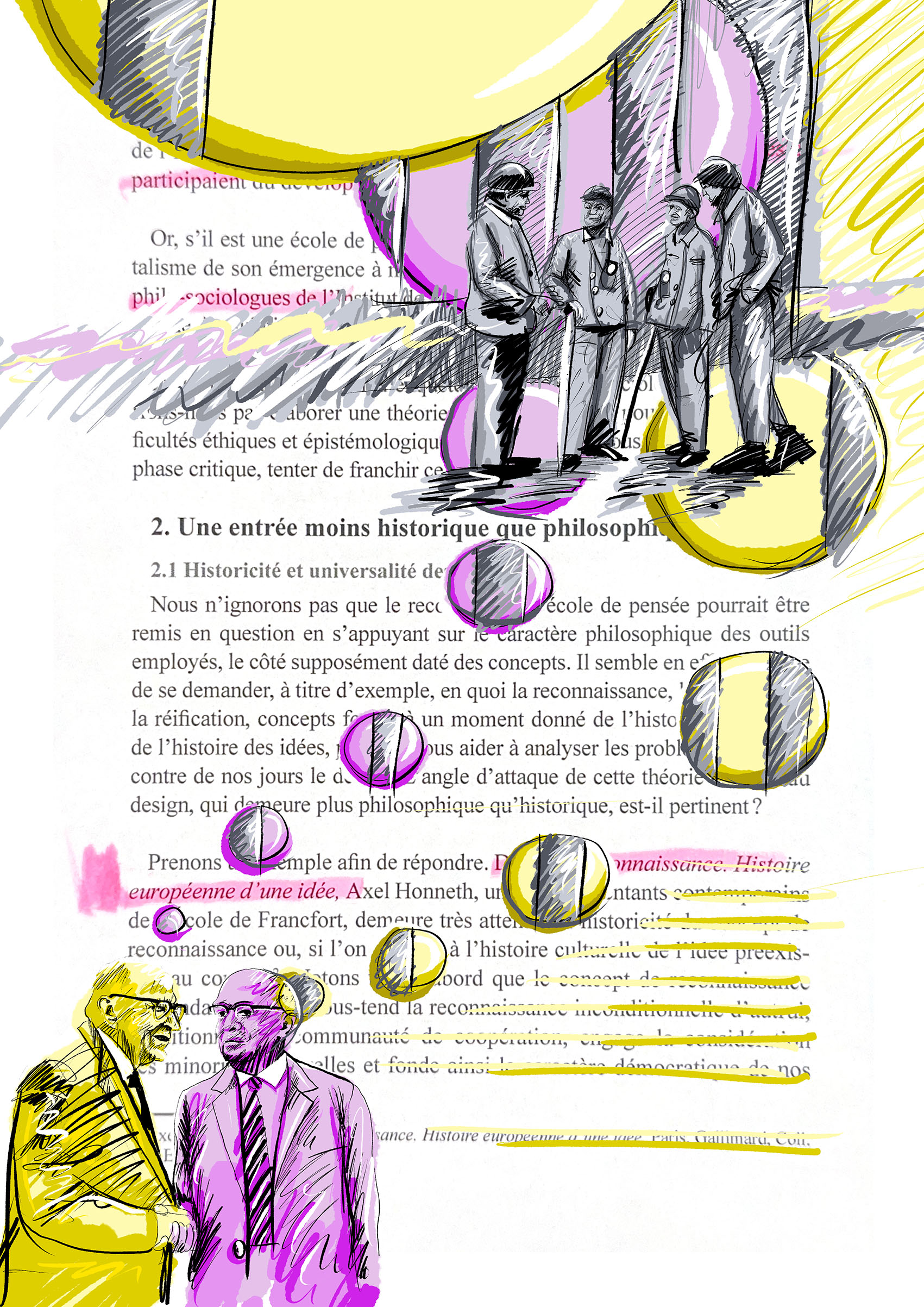
Figure 2. A portrait of Horkheimer and Adorno at the button and Adorno visiting industrial workers in the upper corner
More than that, we tried to not merely reproduce historical or contemporain figures and facts of the Frankfort School, but to project them further, creating a magical universe of non-realistic forms, as you can see looking at the alien-like legs of the green Stephan Lessenich on the right of the image below.
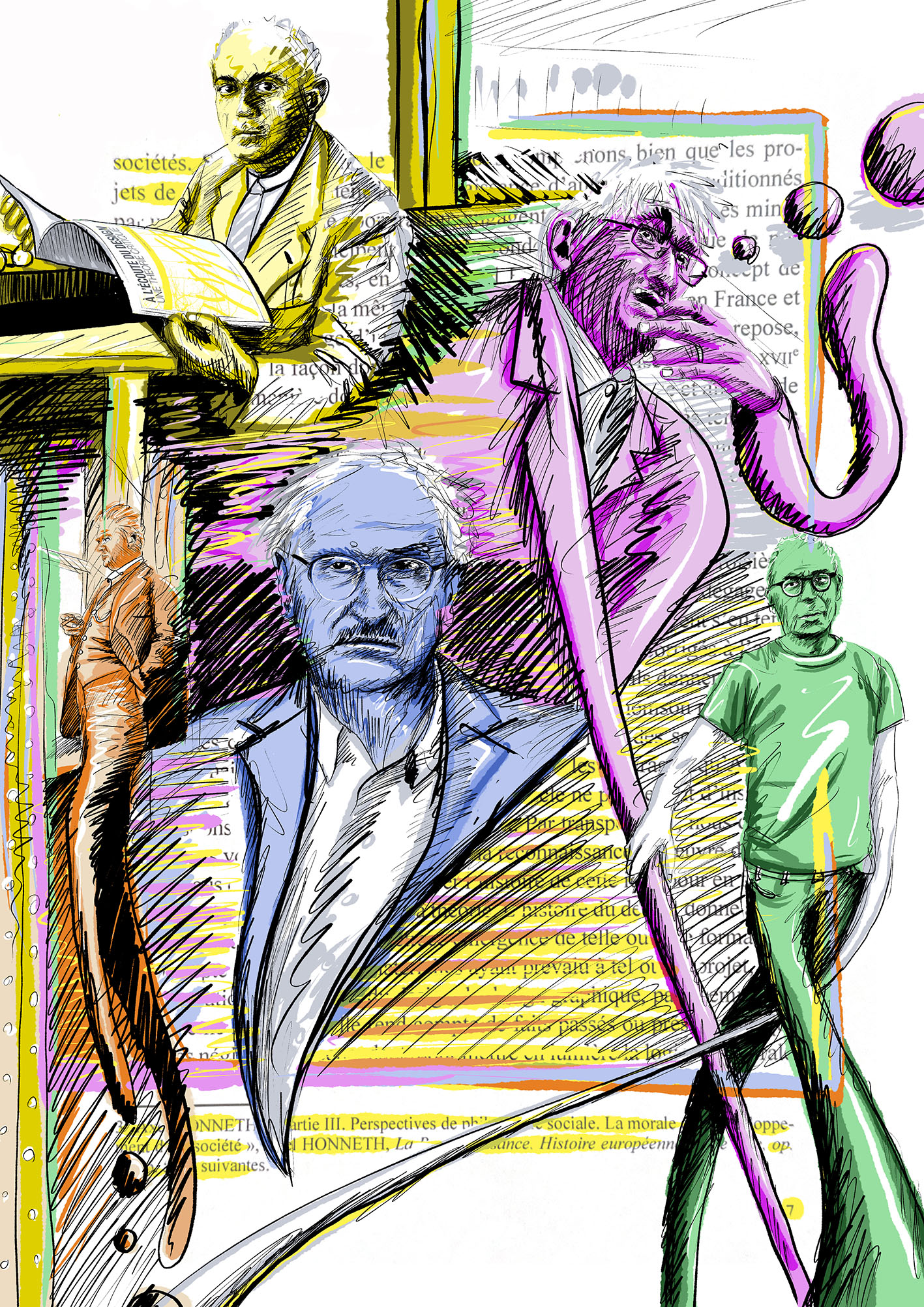
Figure 3. Portraits of Adorno, Habermas, Honneth, Weil, and Lessenich
It was important to us, that the illustrations show their “hand-made” style, that they are not too “clean”, and that they show a certain expressivity. This graphical style represents the values of the Frankfort School thinkers.
These illustrations represent a first idea of how to visualize the book À l´écoute du design in a unique way, the upcoming project steps will need to develop the visual storytelling and enhance the graphical style further. We consider the shown illustrations as first approaches for a graphical direction, and not as final productions.
Visualizing and diffusing the ideas of the Frankfort School becomes ever more important when considering contemporary technological developments and their growing societal importance. More than that, it becomes necessary to project them further and provide an update of how their ideas play a role for today’s design and innovation sector as a core driver of technological development. This is done in the book À l´écoute du design, thereby making the comprehensive realization of the indicated illustration project necessary.